


![Japan tests its Type 12 coastal defense missile system last December. [Japanese Ministry of Defense]](/gc9/images/2026/03/19/55171-1-370_237.webp)
By Chen Wei-chen |
Japan's Defense Ministry showcased long-range missile launchers in southwestern Japan on March 17 ahead of their planned deployment, highlighting Tokyo's shift toward acquiring counterstrike capabilities amid rising regional tensions.
The exhibition, held for local officials and media, precedes the formal deployment of these "counterstrike capabilities." It is scheduled for completion by March 31.
Able to strike across E. China Sea
The deployment centers on the upgraded Type 12 surface-to-ship missile, a truck-mounted system whose range has quintupled from 200km to approximately 1,000km. This move allows the Japan Self-Defense Forces to strike, if needed, from Kumamoto across the East China Sea to North Korea and China's eastern coastline.
The upgraded Type 12 incorporates a low-observable design to evade radar, alongside advanced Active Electronically Scanned Array radar seekers, GPS and terrain-contour mapping for precision guidance against maritime and coastal targets.
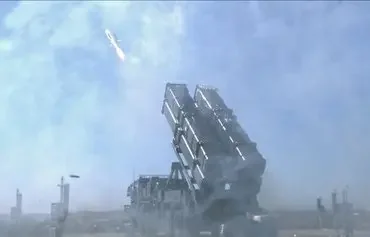
Meanwhile, the island-defense Hyper Velocity Gliding Projectile (HVGP) will be deployed to Shizuoka prefecture by the end of the month.
The HVGP is a hypersonic weapon program launched in fiscal 2018 and developed by Mitsubishi Heavy Industries for Japan's Ground Self-Defense Force and the Acquisition, Technology and Logistics Agency. It is designed to strengthen standoff defense of remote islands by targeting invading naval forces and landing troops.
The HVGP's initial range is estimated at 500 to 900km. Future Block 2A and Block 2B versions are expected to extend that range to about 2,000km and 3,000km, respectively, covering almost all of East Asia.
Domestically produced long-range missiles
The deployments mark the start of Japan's acquisition of domestically produced long-range strike capabilities, which, together with other standoff weapons, form the core of Tokyo's strategy to "deter adversaries by holding key military targets at risk from greater distances," according to the Diplomat.
The deployments are linked to Japan's "emerging counterstrike capability," which would allow it to target enemy bases if it comes under attack.
Japanese officials maintain the capabilities are defensive and would be used only if Japan comes under armed attack. The move reflects Tokyo's evolving interpretation of its exclusively defense-oriented policy as it seeks to enhance deterrence in contested regional waters.
Japan has accelerated defense deployments across its southwestern islands in recent years. In 2024, the Defense Ministry moved forward the schedule for deploying domestically produced long-range missiles by one year.
PAC-3 interceptors and medium-range surface-to-air missiles have already been deployed on islands including Okinawa, Ishigaki and Miyako.
China's Defense Ministry criticized the move, saying Japan had "completely stripped away its pretense of 'exclusively defense-oriented' principle, 'passive defense' strategy and 'self-defense' policy."
"This speaks volumes about the neo-militarism in Japan," spokesperson Jiang Bin said March 11.
Protecting the 'first island chain'
The Type 12 and HVGP deployments could strengthen Japan's ability to deter adversaries from approaching key maritime areas, Japanese media said.
Their extended ranges cover key waterways along the strategic "first island chain" and could enable strikes against enemy launch sites if necessary.
The first island chain includes Japan, Taiwan and the Philippines.
Japan's approach mirrors China's long-standing use of anti-access capabilities, John Bradford, executive director of the Yokosuka Council on Asia-Pacific Studies, told the South China Morning Post.
"Any navy ship entering the East China Sea knows it can be targeted by either China or Japan," he said. "The 'mutual sea denial' will make both sides hesitant to use force."
The deployment would raise the cost of attacking Japan and would hinder Chinese military planning, Liselotte Odgaard, a senior fellow at the Hudson Institute, told the South China Morning Post.
Beijing now has to take possible Japanese retaliation into account before it initiates combat in the East China Sea or around Taiwan, she said.
"The Japanese government has strengthened its position of contributing first to its own stability and the stability of the region through its own efforts," Junjiro Shida, an associate professor of international politics at Meio University in Nago, Japan, told Stars and Stripes.
Joint Japanese-US drill in February
Besides arming itself, Japan continues to work closely with the United States in protecting the region.
Ahead of the planned March deployment, Japanese and US forces conducted the Keen Edge 2026 exercise, Japan's Yomiuri Shimbun reported in late February.
The exercise, which simulated an armed attack on the southwestern Japanese islands, included jointly identifying targets and rehearsing procedures for launching long-range missiles against enemy launch sites.